Free Download Psychiatric Drug Withdrawal: A Guide for Prescribers, Therapists, Patients and their Families
After for times, publications constantly become one option to obtain the resource, the dependable and legitimate resources. The topics concerning organisation, monitoring, national politics, law, and many various other topics are offered. Many writers from around the globe always make guide to be upgraded. The research study, experience, expertise, and ideas constantly come one time to others. It will verify that publication is timeless as well as perfect.
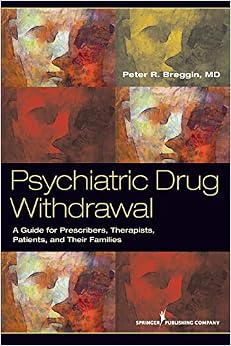
Psychiatric Drug Withdrawal: A Guide for Prescribers, Therapists, Patients and their Families

Free Download Psychiatric Drug Withdrawal: A Guide for Prescribers, Therapists, Patients and their Families
Earn currently guide qualified Psychiatric Drug Withdrawal: A Guide For Prescribers, Therapists, Patients And Their Families to be your resources when going to review. It can be your brand-new collection to not only display in your racks however likewise be the one that could aid you fining the most effective sources. As alike, book is the window to get on the planet and also you can open the world conveniently. These sensible words are actually aware of you, right?
When some individuals checking out you while reviewing Psychiatric Drug Withdrawal: A Guide For Prescribers, Therapists, Patients And Their Families, you could feel so happy. However, rather than other individuals feels you need to instil in on your own that you are reading Psychiatric Drug Withdrawal: A Guide For Prescribers, Therapists, Patients And Their Families not due to that factors. Reading this Psychiatric Drug Withdrawal: A Guide For Prescribers, Therapists, Patients And Their Families will give you greater than individuals admire. It will certainly overview of know greater than individuals looking at you. Even now, there are several resources to understanding, reading a publication Psychiatric Drug Withdrawal: A Guide For Prescribers, Therapists, Patients And Their Families still comes to be the first choice as a terrific way.
So, even you require commitment from the business, you may not be perplexed more considering that books Psychiatric Drug Withdrawal: A Guide For Prescribers, Therapists, Patients And Their Families will constantly assist you. If this Psychiatric Drug Withdrawal: A Guide For Prescribers, Therapists, Patients And Their Families is your best companion today to cover your task or work, you could when possible get this book. Just how? As we have told recently, merely go to the web link that we offer below. The conclusion is not just the book Psychiatric Drug Withdrawal: A Guide For Prescribers, Therapists, Patients And Their Families that you hunt for; it is exactly how you will certainly get several publications to assist your skill and also ability to have great performance.
Locating this Psychiatric Drug Withdrawal: A Guide For Prescribers, Therapists, Patients And Their Families as the right publication truly makes you feel eased. Also this is just a book; you can locate some benefits that cannot be obtained from any other sources. Meeting the interested it is sometime really simple, yet at some point it needs the large initiative. As below, prior to locating this internet site to obtain guide, you could really feel so overwhelmed. Why? It's due to the fact that you truly require this outstanding book to read as soon as possible.
As a physician who specializes in addiction medicine and drug withdrawal and written widely on them, I recommend Dr. Breggin's book to every health professional who deals with anyone taking psychiatric drugs. He gives highly useful information and reasons for stopping or avoiding them. It's an excellent one-stop source of information about psychiatric drug effects and withdrawal. Prescribers, therapists, patients, and families will benefit from this guidebook. Charles L. Whitfield, MD Bestselling author of Healing the Child Within and many other books Peter Breggin has more experience in safely withdrawing psychiatric patients from medication than any other psychiatrist. In this book he shares his lifetime of experience. All of our patients deserve the benefit of our obtaining that knowledge. Bertram Karon, PhD Professor of Psychology, Michigan State University Author, The Psychotherapy of Schizophrenia Former President of the Division of Psychoanalysis of the American Psychological Association This is such an important book. Describing the problem of withdrawal from psychiatric drugs in detail, and providing clear advice regarding how to deal with this problem as Peter has done so well in this book, is long overdue. For decades, the belief system that is mainstream psychiatry has denied the existence of withdrawal problems from the substances they prescribe so widely. In reality, withdrawal problems with psychiatric drugs is a common occurrence. Because of psychiatry's reckless denial of this real and common problem, millions of people worldwide have not had the support and care they desperately need when attempting to come off psychiatric drugs, often been erroneously advised that these problems are confirmation of the existence of their supposed original so-called 'psychiatric illness.' Dr. Breggin's book is therefore both timely and necessary." Terry Lynch, MD Physician and Psychotherapist Author of Beyond Prozac: Healing Mental Suffering Without Drugs and Selfhood: A Key to the Recovering of Emotional Well Being, Mental Health and the Prevention of Mental Health Problems Dr. Peter Breggin has written an invaluable reference for mental health professionals and lay-persons alike who are seeking a way out of dependency on psychiatric drugs. He describes the many dangers of psychiatric medication in straightforward research-based and contextually nuanced terms. Most helpfully, he articulates a method of empathic, person-centered psychotherapy as an alternative to the prevailing emotionally and system disengaged drug-centered approach. In this book, Dr. Breggin systematically outlines how to safely withdraw a patient from psychiatric medication with rich case examples drawn with the detail and sensitivity to individual and situational differences that reveal not only his extensive clinical experience, but his clear, knowledgeable, and compassionate vision of a more humane form of treatment. In this volume, Dr. Peter Breggin has again demonstrated that he is a model of what psychiatry can and should be. This is an indispensable text for both mental health trainees and experienced practitioners seeking a practical alternative to the dominant drug-centric paradigm. Gerald Porter, PhD Vice President for Academic Affairs School of Professional Psychology at Forest Institute This much needed book and guide to psychiatric medication withdrawal is clearly written and easy to understand. As people become more empowered and able to inform themselves about the effects of pharmaceuticals, practitioners will be called upon to wean their patients off of damaging medications. This book will provide that guidance. Thank you Dr. Breggin for having the courage to oppose conventional psychiatric thinking and the caring to improve the quality of life for individuals who are ready to experience their own innate healing instead of reaching for a pill to mask the symptoms. Melanie Sears, RN, MBA Author, Humanizing Health Care and Choose Your Words Today many psychologists, nurses, social workers, and counselors are struggling with how to help adults and the parents of children who are over-medicated or who wish to reduce or stop taking their psychiatric drugs. Dr. Breggin's book shows non-prescribing professionals, as well as prescribers, how to respond to their patient's needs in an informed, ethical, and empowering fashion. Sarton Weinraub, PhD Clinical Psychologist Director, New York Person-Centered Resource Center, NYC This is the first book to establish guidelines and to assist prescribers and therapists in withdrawing their patients from psychiatric drugs, including those patients with long-term exposure to antipsychotic drugs, benzodiazepines, stimulants, antidepressants, and mood stabilizers. It describes a method developed by the author throughout years of clinical experience, consultations with experienced colleagues, and scientific research. Based on a person-centered collaborative approach, with patients as partners, this method builds on a cooperative and empathic team effort involving prescribers, therapists, patients, and their families or support network. The author, known for such books as Talking Back to Prozac, Toxic Psychiatry, and Medication Madness, is a lifelong reformer and scientist in mental health whose work has brought about significant change in psychiatric practice. This book provides critical information about when to consider psychiatric drug reduction or withdrawal, and how to accomplish it as safely, expeditiously, and comfortably as possible. It offers the theoretical framework underlying this approach along with extensive scientific information, practical advice, and illustrative case studies that will assist practitioners in multiple ways, including in how to: Recognize common and sometimes overlooked adverse drug effects that may require withdrawal Treat emergencies during drug therapy and during withdrawal Determine the first drugs to withdraw during multi-drug therapy Distinguish between withdrawal reactions, newly occurring emotional problems, and recurrence of premedication issues Estimate the length of withdrawal
Your recently viewed items and featured recommendations
›
View or edit your browsing history
After viewing product detail pages, look here to find an easy way to navigate back to pages you are interested in.
Product details
Paperback: 352 pages
Publisher: Springer Publishing Company; 1 edition (July 19, 2012)
Language: English
ISBN-10: 0826108431
ISBN-13: 978-0826108432
Product Dimensions:
6 x 0.8 x 9 inches
Shipping Weight: 1.1 pounds (View shipping rates and policies)
Average Customer Review:
4.3 out of 5 stars
68 customer reviews
Amazon Best Sellers Rank:
#73,632 in Books (See Top 100 in Books)
The book talks about how psychiatric drugs damage your brain but it only has 1 short chapter on how to withdraw from the drugs by tapering off by 10% as an example. The book has case studies of psychiatricwithdrawal but not a lot of info on how to handle the withdrawal symptoms except by family and therapeutic emotional support by the medical staff.
Plenty of valuable information but a ridiculous price for a regular book. I was expecting more of a reference style book.
This is a great book, especially if you want to SLOWLY come off of your meds. Shows the ins and outs of what you may face and addresses it quite clearly and thoroughly. I've been off all my meds for 6 months and I've been doing better than ever when in the past I had struggled so much that I had returned to taking the psych drugs. Never again! And this book will show you the right way to go about coming off your psych meds safely. Remember that coming off requires a slow taper. Personally, it took me 5 months to taper. The book teaches that it may take longer or less than that and will tell you the safest way to get off the meds. Can't say enough for Dr.Breggin or this book!
In Peter Breggin's view, I'm doomed to hell on earth -- nothing can change that. Damage done; hope not any longer.Few books are worth $45 bucks. Especially when the author offers hope and so-called "guidance" to people and families about psychiatric drug withdrawal. Breggin makes no effort to describe what the withdrawal will actually be like, he ignores what drove his readers to take the "medication" in the first place, and he offers no insight about how people can handle their problems during withdrawal and mainly he suggests such people can subsist on his rare but selfless brilliance, which exists ... nowhere.FWIW Mr. Breggin, I've never heard of any psychiatrist so caring as to bring his wife to a patient's home on a Sunday afternoon for an impromptu trip to their office to help them cope.In fact, Mr. Breggin, it's astonishing that nowadays psychiatrists avoid the very people they've damaged so dispassionately.I'm sad to see you portray yourself and Ginger as such people, who then turn around and accept $45 bucks for a book that will help relatively few people stay away from them.I respected you a lot as a student of Dr. Satz, but you're simply grabbing up money from people who often have absolutely nothing left to give. Pity you. Greed does bring out an ugliness far worse than anything you describe.I gave this book a higher rating to encourage those considering these disabling meds to ... find another way.
Excellent research and independent view from what has been force fed, taught, and imposed on patients. A great sign of hope and a course correction verification for what inwardly a patient has known all along, this medication isn’t good for me and is making my life worse and no body in the medical field, hospitals, or state hospitals will listen. This is a journey of hope on a difficult but worth it path back to living life much closer to normal than it’s been for over 30 years. Thank God for Dr. Breggin and the others who are also now finding forging this path, I wish we would have found this much earlier, but and grateful we finally did.
Breggin understands the relationship between drug use and abuse and symptoms related to chronic use and withdrawal. After the work of Whitaker (2010 and Whitaker and Cosgrove (2015) there should be no more denial regarding the impact of psychotropic medications on mental illness. Psychotropic medications seem to promote the symptoms they are in fact suppose to remediate. Dr Breggin understands this and therefore provides a detailed approach for helping professionals help patients withdraw from these destructive drugs.
I was disappointed with the lack of specificity about HOW to withdraw in terms of tapering schedules, drug substitutions, and so on. Breggin spent an inordinate amount of time on the psychosocial aspects of withdrawal like therapist or family involvement. I think his title is misleading because it SHOULD be a "how-to" book on how to get off of these dangerous medications. As far as the psychosocial aspects, no two people have the same level of family/friend support for their plight.I also believe he spent far too little time on the benzodiazepines in particular. Withdrawal from these drugs can be positively life threatening. I can tell any would-be purchasers of this book who are on benzodiazepines should consult the work of Heather Ashton because Breggin's book is worthless for those seeking concrete withdrawal advice for specific benzos.In summary, I feel that the book's title is misleading and its advice not medically specific enough to be relevant to takers of psychiatric medications. And the book is NOT cheap.
Evidence WHY it is important to consider withdrawal of medications. Discusses issues and problems of long term psychiatric medication. Prepares the physician, family, and patient for realistic issues and difficulties with withdrawing the medication. Emphasizes the trials and tribulations that one will have to face during withdrawal as well as the safest way to start decreasing dosages.Wonderful & necessary addition to any physicians personal library. Very Useful. Since benzodiazepines, antidepressants, and sleep medications are prescribed so frequently.Note: Supportive nutritional and supplement therapies are not discussed.
Psychiatric Drug Withdrawal: A Guide for Prescribers, Therapists, Patients and their Families PDF
Psychiatric Drug Withdrawal: A Guide for Prescribers, Therapists, Patients and their Families EPub
Psychiatric Drug Withdrawal: A Guide for Prescribers, Therapists, Patients and their Families Doc
Psychiatric Drug Withdrawal: A Guide for Prescribers, Therapists, Patients and their Families iBooks
Psychiatric Drug Withdrawal: A Guide for Prescribers, Therapists, Patients and their Families rtf
Psychiatric Drug Withdrawal: A Guide for Prescribers, Therapists, Patients and their Families Mobipocket
Psychiatric Drug Withdrawal: A Guide for Prescribers, Therapists, Patients and their Families Kindle